Some of the most important work on a project happens before anything looks finished. Concrete is a good example. Whether it is a foundation, a retaining wall or a sculptural bench in a garden, the quality of the finished concrete is decided almost entirely before the truck arrives.
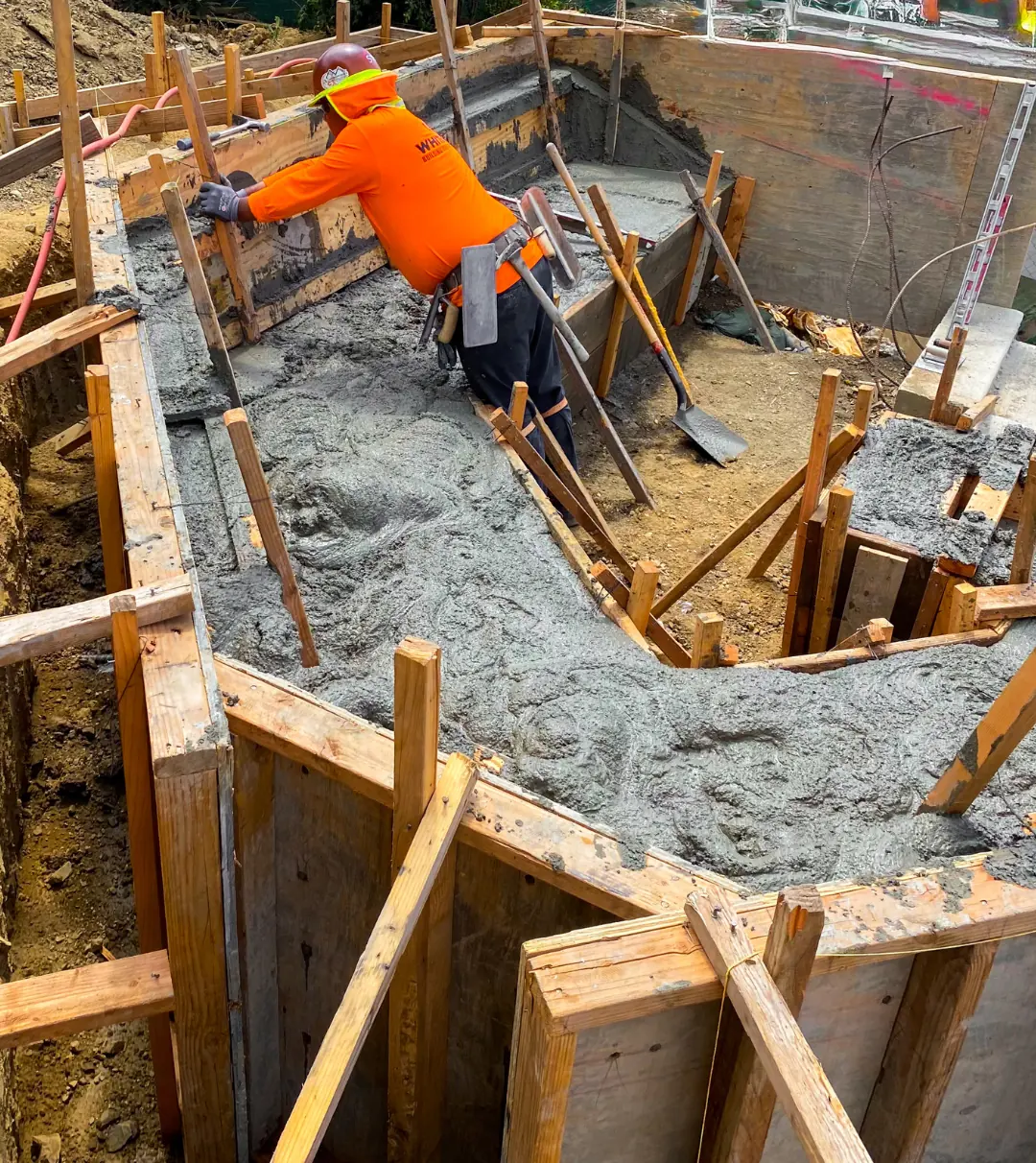
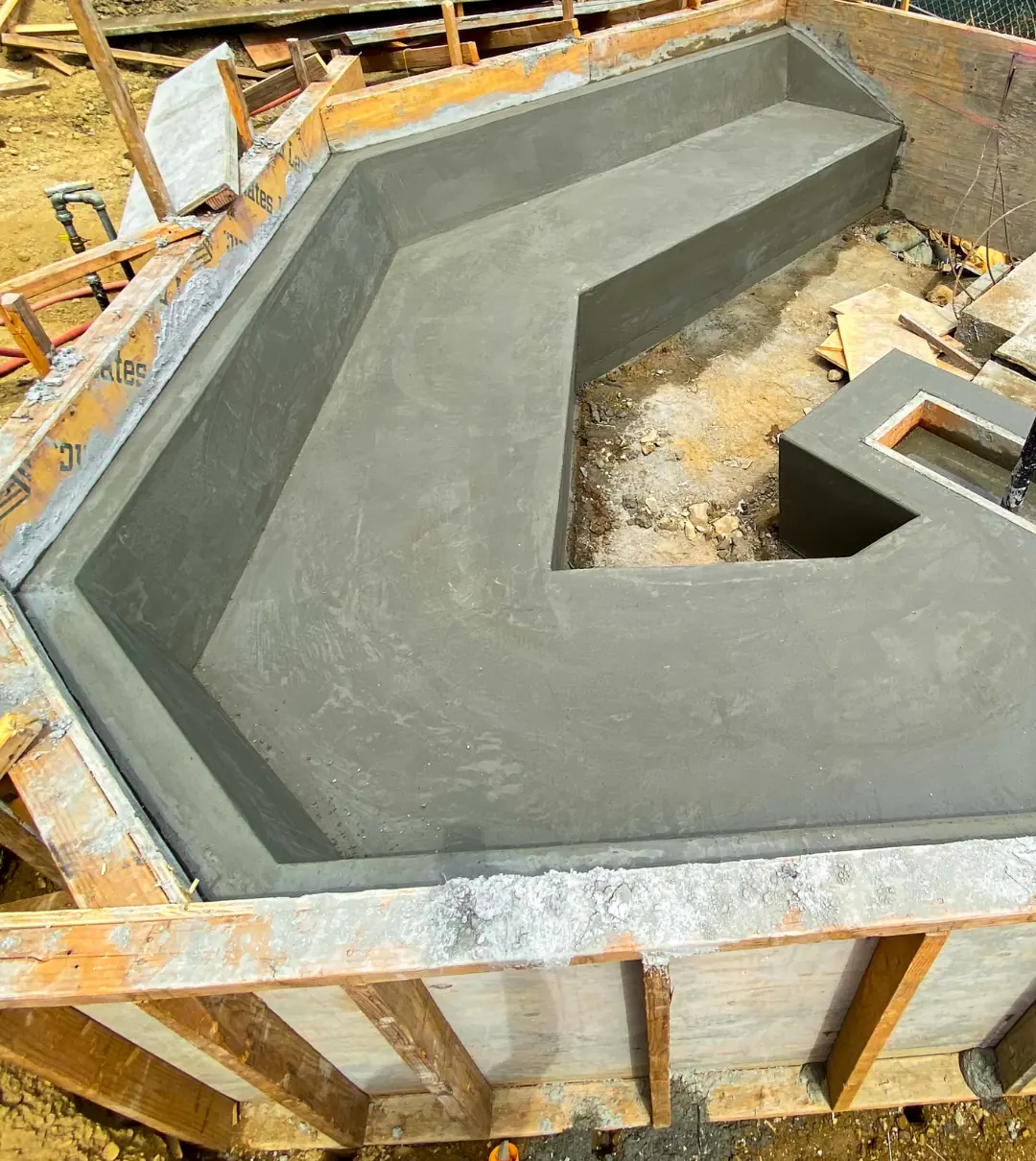
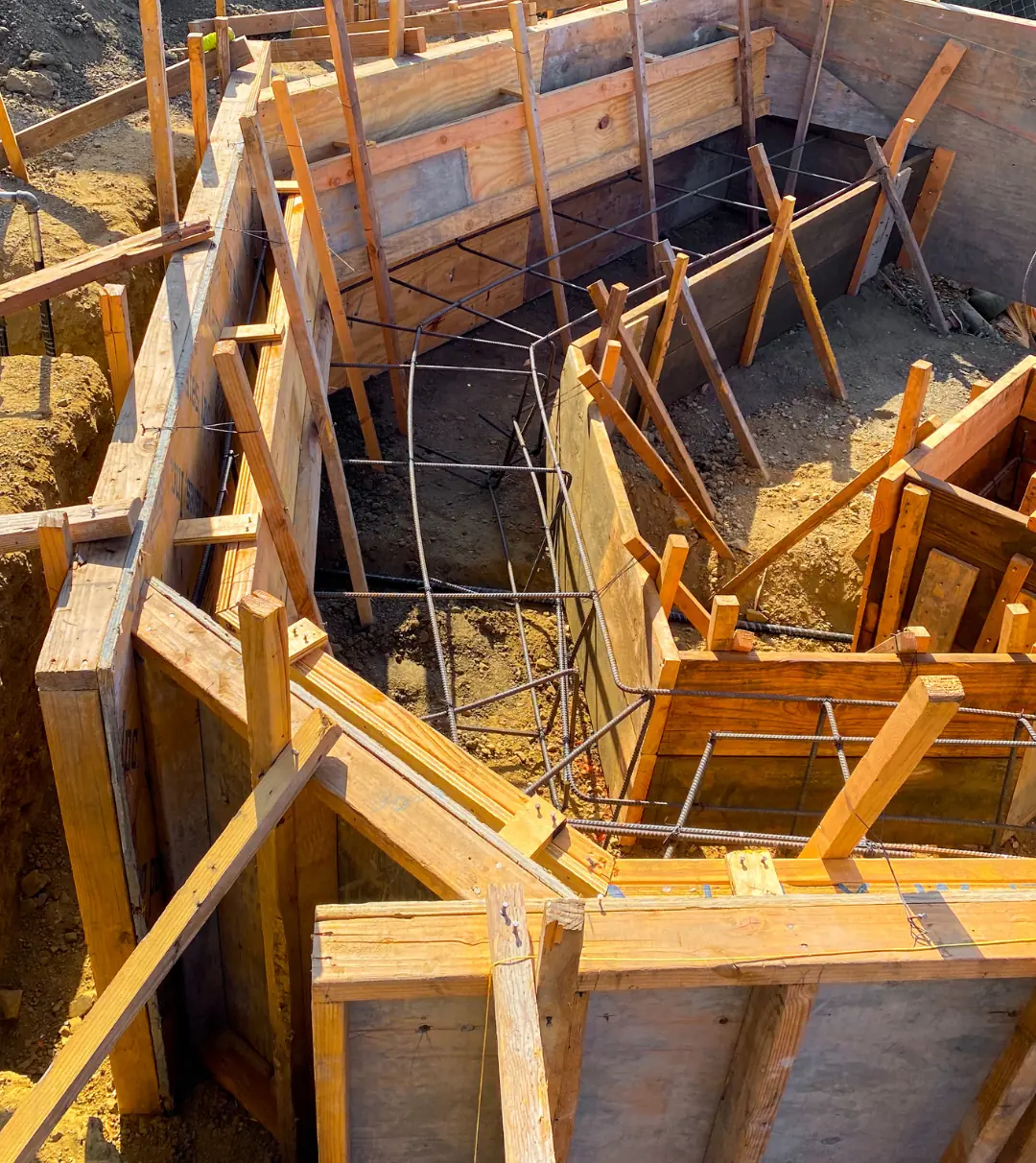
The photographs here follow one cast-in-place concrete bench through three stages: reinforcement and formwork, the pour, and the cast piece curing in its forms.
Reinforcement carries what concrete cannot
Concrete is extremely strong when it is squeezed and comparatively weak when it is pulled. Steel reinforcing bar, or rebar, takes the tension. It is cut, bent and tied into cages that follow the structural drawings: the bar size, the spacing and the clearance between the steel and the outside face of the concrete all matter.
That clearance, called cover, protects the steel from moisture and corrosion. Small plastic or concrete chairs hold the rebar at the right position so it does not sink to the bottom of the form during the pour.
Formwork is the mold
Concrete takes the exact shape of whatever holds it. Forms are built from plywood and lumber, braced against the pressure of wet concrete, and checked for level, plumb and dimension. Angles, chamfered edges and smooth faces in the finished piece are created here.
Well-built formwork is tight at every joint so cement paste cannot leak out, stiff enough not to bulge, and accurate to the drawings. A few millimeters of movement in the forms becomes a visible wave in the finished surface.
Embedded items go in first
Anything that must pass through or attach to the concrete is placed before the pour: electrical conduit for lighting, sleeves for plumbing, anchor bolts and connectors. On the bench shown here, that includes the base for an integrated feature. Forgetting one of these means cutting or drilling cured concrete later.
Inspection before the pour
For structural concrete such as foundations, the building department typically inspects the reinforcement and forms before concrete is placed. It is the last chance to confirm the work matches the approved drawings while it is still visible.
The pour and the cure
Concrete is placed and consolidated so it fills every corner of the form and surrounds the steel without voids. Then it needs time and moisture to cure. Protecting fresh concrete from drying too fast, especially in Los Angeles sun and wind, helps it reach its strength and reduces cracking.
Why it matters to the finish
When the forms come off, the result is what the preparation allowed. Crisp edges, true angles and a smooth face come from careful steel and formwork. Plaster, stone or paint applied later can refine a surface, but they cannot correct a crooked wall or a bulging edge.
This is the kind of work owners rarely see, and it is one of the reasons we photograph it. Interested in how this applies to your project? We are happy to talk it through.