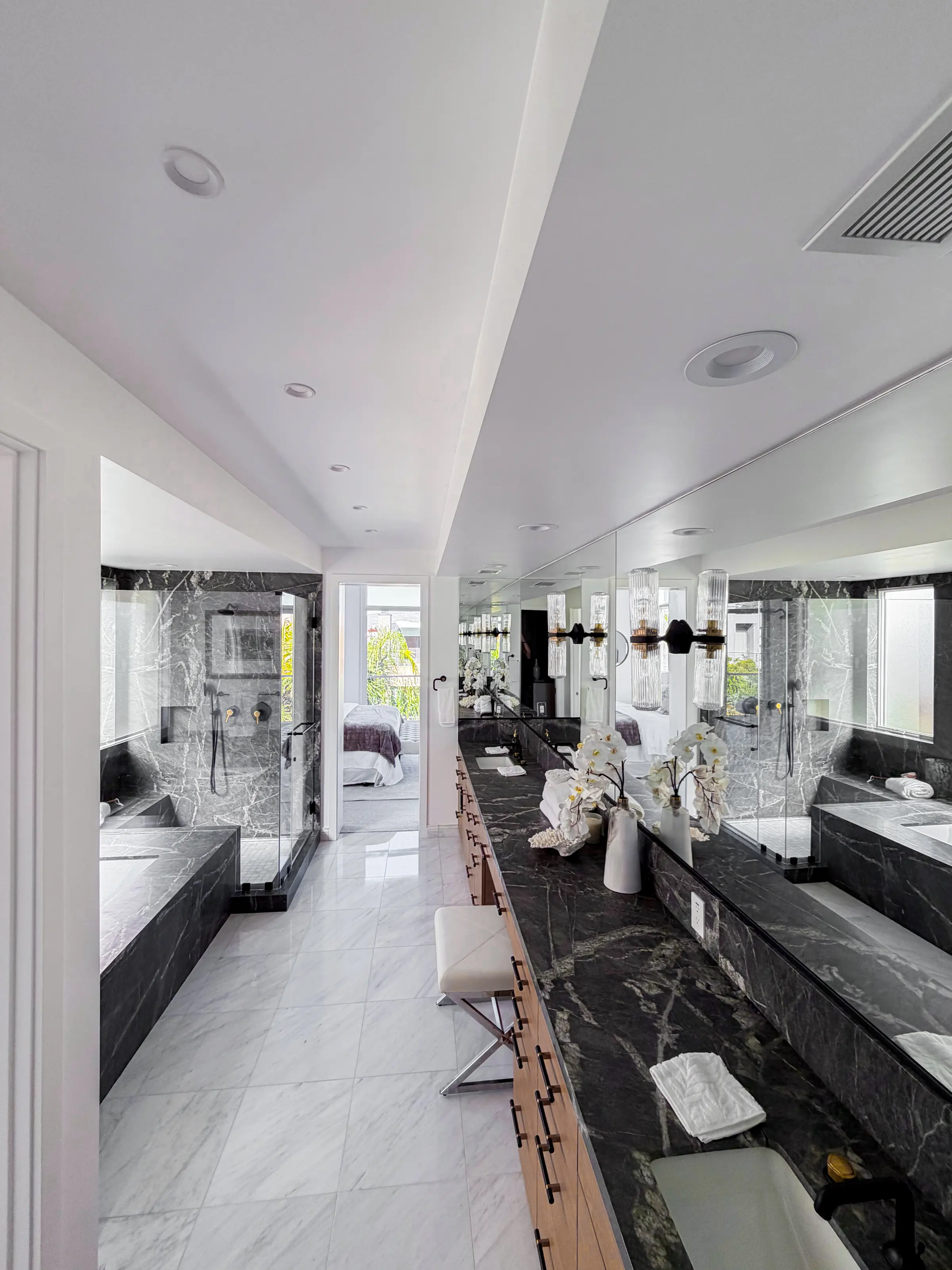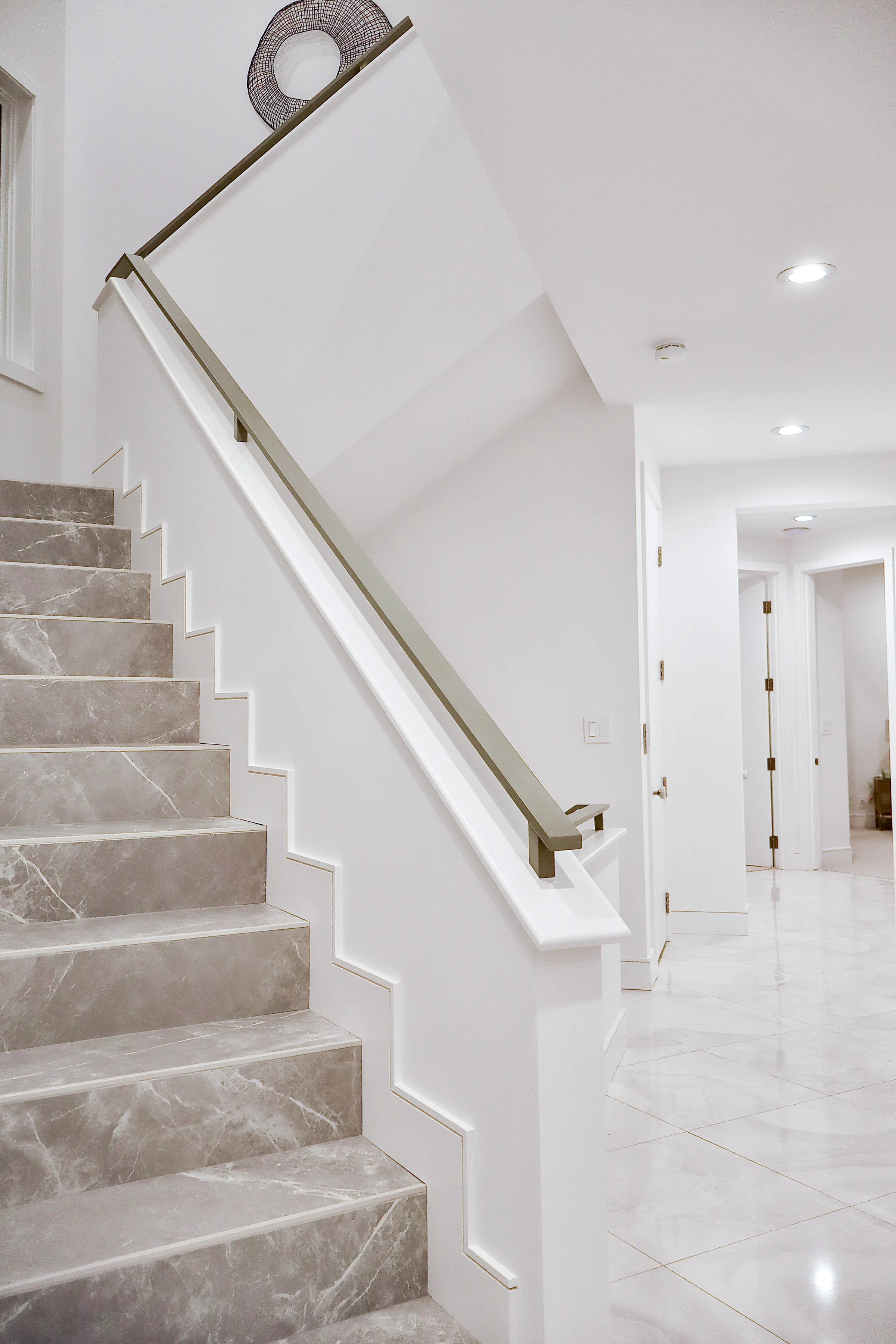
Natural stone is one of the most visible decisions in a high-end home. It sets the tone of a kitchen, defines a primary bath and often runs onto walls, stairs and floors. Two stones come up in almost every conversation: marble and quartzite. They can look remarkably similar in a showroom, yet they behave very differently once they are installed and used every day.
What each stone is
Marble forms when limestone or dolomite is transformed by heat and pressure. Its main mineral, calcite, is relatively soft. That softness is part of marble’s appeal: it takes a deep polish, carves beautifully and develops a gentle patina with age.
Quartzite begins as sandstone and is fused under heat and pressure into a dense stone made mostly of quartz. Quartz is much harder than calcite, so quartzite holds up better to knives, pots and daily wear.
Etching and staining are different problems
Most disappointment with stone comes from confusing these two.
- Etching is a chemical reaction. Acids in lemon juice, wine, vinegar or some cleaners dissolve a thin layer of calcite and leave a dull mark. Marble etches. Sealer does not prevent it.
- Staining happens when a liquid soaks into the stone’s pores and leaves color behind. Both marble and quartzite can stain, and a good penetrating sealer slows it down.
If you want a kitchen counter that looks the same in ten years as on the day it was installed, quartzite is the more forgiving choice. If you love the way stone ages, marble rewards you with character.
Watch for stones sold under the wrong name
Some slabs are sold as quartzite when they are actually a dolomitic marble or a softer stone with a quartzite-like look. Before you commit to a slab, ask the supplier for a scratch test on an offcut: true quartzite will scratch glass, and a knife blade will not mark it. A simple acid test with a drop of lemon juice on a sample tells you whether the stone will etch.
Where each stone works best
| Location | Marble | Quartzite |
|---|---|---|
| Kitchen counters and islands | Works if you accept etching; choose a honed finish | Strong choice for daily cooking |
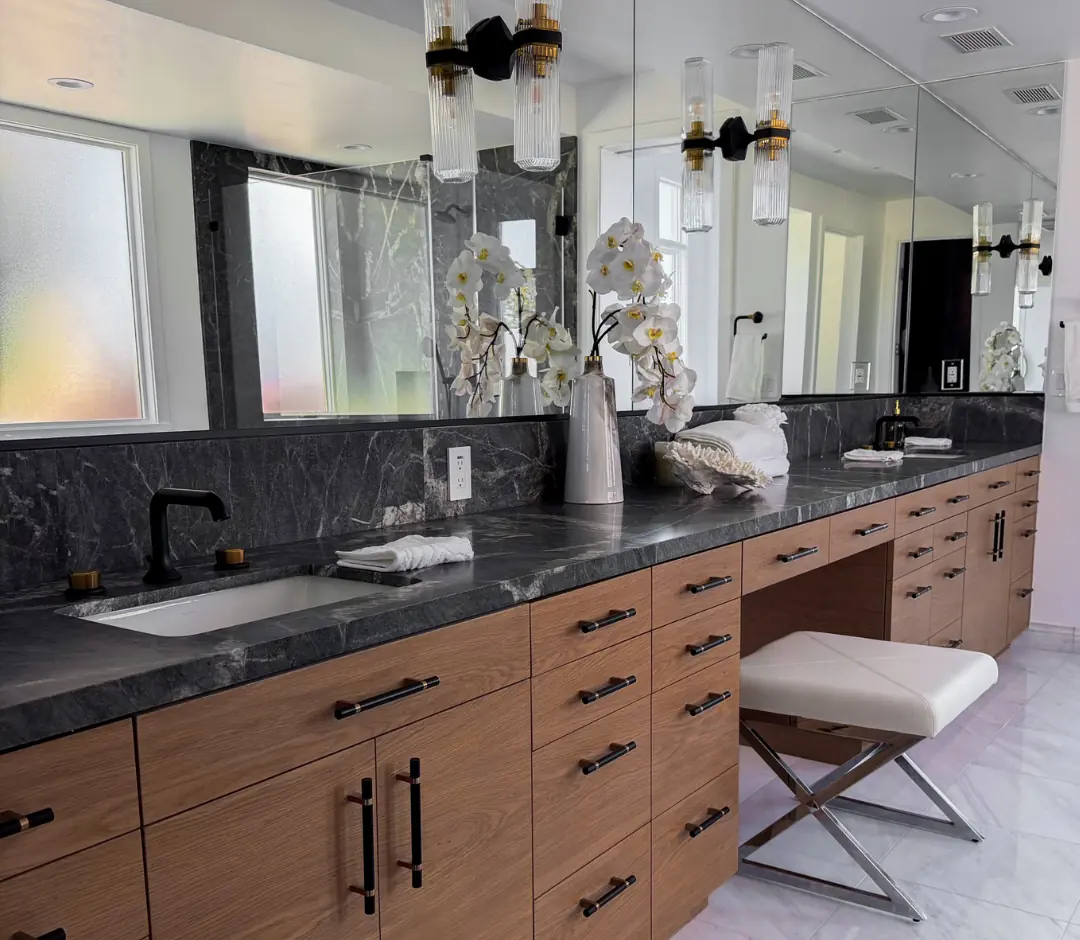
| Bathroom vanities | Excellent | Excellent |
| Shower walls and floors | Excellent, with the right finish for slip resistance | Excellent |
| Stair treads and floors | Beautiful, will show wear paths over time | Very durable |
| Fireplace surrounds and feature walls | Excellent | Excellent |
Finish changes how stone lives
A polished finish makes veining vivid and reflects light, but it shows etching and scratches clearly. A honed finish is matte, hides etching and feels softer to the touch. A leathered finish adds texture that hides fingerprints and water spots. On a waterfall island or a large vanity, the finish matters as much as the stone itself.
Plan the slab, not just the stone
Natural stone is unique slab by slab. On larger projects we recommend:
- Selecting the actual slabs in person, not from a small sample.
- Laying out the cuts before fabrication, so veining flows across seams, around corners and down waterfall edges.
- Confirming thickness and edge details early, since they affect cabinetry heights, overhangs and support.
- Ordering early. Exotic slabs can take time to source and fabricate, and they are often on the critical path of a remodel.
Installation is where stone succeeds or fails
Stone needs a flat, rigid base, correct support at overhangs and careful handling at cutouts for sinks and cooktops. In wet areas it needs proper waterproofing behind it, since stone and grout are not waterproof on their own. Those details are invisible once the room is finished, which is exactly why they deserve attention during construction.
If you are weighing stone for a kitchen, bath or full-home renovation, we are glad to walk through the options for your project.